Contractor Accommodation Management: What Procurement Teams Should Expect
What should procurement teams expect from contractor accommodation management services? We explain supplier funding, consolidated procurement, B-BBEE documentation and responsibility for managing project requirements.
Categories:
The Hidden Administrative Cost of Managing Contractor Accommodation Internally
Since 2011, we have managed contractor accommodation across South Africa’s major project and industrial corridors. Over those fifteen years, our work at iLodge has centred on a practical procurement requirement: arranging suitable accommodation with clear commercial terms and a defined party responsible for managing the outcome. Our supplier-funded model aims to keep the service cost neutral for clients, while consolidated procurement through iLodge brings the accommodation and agreed support services under one accountable commercial relationship.
For procurement and project heads, selecting a provider requires more than comparing room rates. The assessment should establish who contracts with suppliers, how changes are authorised, what the quoted rate includes and how expenditure can be reconciled against the project requirement. These questions become particularly important when teams are deployed across several properties, headcounts change or accommodation must be extended at short notice.
This is what procurement teams should expect from contractor accommodation management services, and how we approach those responsibilities at iLodge.
What Are Contractor Accommodation Management Services?
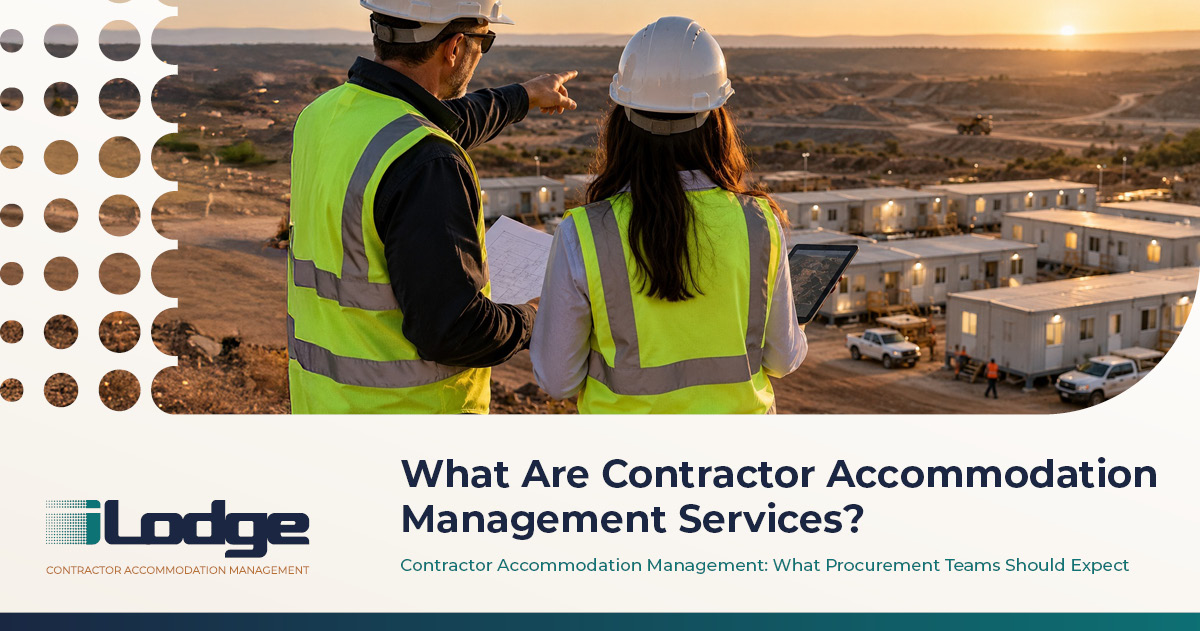
Contractor accommodation management services cover the sourcing, vetting, coordination and ongoing management of accommodation for teams working away from home on a project. Depending on the agreed requirement, the service can also include transport, meals, catering coordination and related support services, managed under a single commercial relationship.
At iLodge, we coordinate both the corporate requirement and the supplier arrangements needed to fulfil it. We source suitable guest houses, lodges, self-catering units and bulk-room arrangements, then manage the operational relationship through our service desk. Where required, we also arrange daily transfers, inter-site movement and meals so these services can be coordinated around the project’s operating requirements.
The distinction matters when assessing proposals. A confirmed room booking addresses availability at a particular moment. Managed contractor accommodation also requires someone to coordinate what happens when arrival dates move, a property cannot meet an agreed requirement or a team needs to remain on site longer than expected. Procurement teams should establish how those responsibilities are allocated before the project begins.

Why a Fifteen-Year Track Record Matters in Project Accommodation
We have operated since 2011, managing project accommodation across South Africa’s energy, mining, construction and infrastructure sectors. That experience informs how we assess requirements, coordinate local suppliers and manage the changes that occur during a project.
Accommodation planning needs to reflect mobilisation dates, shift patterns, room configurations and the practical distance between a property and the site. A suitable arrangement for a small technical team may differ considerably from the arrangement needed for a larger group deployed over several months. Availability alone does not establish whether a property can support the requirement throughout the intended stay.
Our role is to bring those considerations into the sourcing and coordination process. If transport or meals are required, we consider how they fit with the accommodation arrangement and daily schedule. For long-term requirements, we can also source, negotiate and contract property leases as principal on behalf of clients, subject to the agreed arrangement.
For a procurement team, experience should translate into practical questions and clear responsibilities. A provider should be able to explain how it assesses suitability, manages changing requirements and responds when a supplier arrangement needs attention. Our fifteen-year track record provides the operating experience behind that conversation.

How the Supplier-Funded Model Affects Your Project Budget
Our contractor accommodation management services are funded through the net rate spread we negotiate with our supplier network. The negotiated supplier net rate is typically around 15% below the supplier’s standard advertised rate. That spread funds our management service, allowing us to aim for cost neutrality for the corporate client.
In most cases, clients pay no more through iLodge than they would at the supplier’s advertised rate, while receiving the coordination and ongoing management included in the agreed service. The negotiated spread is therefore not a promise of a 15% discount to the client. It is the mechanism that funds the management service without adding a separate management fee to the project budget.
Cost neutrality is an objective rather than a guarantee for every requirement. Availability, location, duration and the services needed influence the arrangement we can offer. Procurement teams should assess the actual proposal and confirm the included services, applicable rates and conditions before approval.
For example, two accommodation proposals may show different nightly rates because one includes meals or transport and the other does not. A useful comparison needs to identify the same scope in each proposal. The corporate team should also consider the internal time required to source properties, coordinate suppliers and reconcile separate accounts when assessing the overall procurement decision.
We offer a credit arrangement structured around 30-day service exposure, with payment due within 14 days after invoice. The applicable terms should be confirmed as part of the client’s commercial arrangement, so procurement and finance have a shared understanding before services commence.
How Consolidated Procurement Supports B-BBEE Requirements
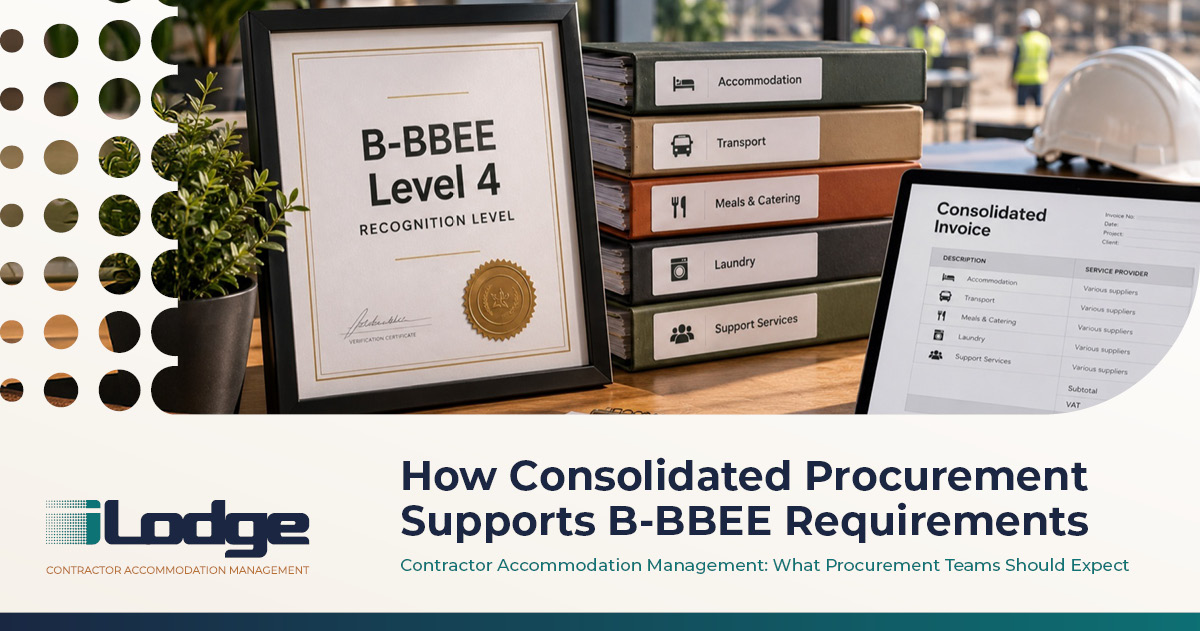
Integrated Lodging (Pty) Ltd t/a iLodge holds a B-BBEE Level 4 recognition level. Procurement routed through iLodge brings the agreed accommodation and support spend under one supplier relationship, with compliance documentation available on request.
This gives procurement teams a consolidated commercial record for services that may be delivered by several local suppliers. Rather than coordinating separate supplier accounts for each property and related service, clients receive one consolidated invoice through iLodge. The agreed requirements, charges and supporting records can then be reviewed within that relationship.
Consolidation should still provide a clear view of what was supplied and charged. Procurement teams should establish the information needed for their approval and reconciliation processes, including the relevant project references, service periods and agreed scope. We discuss those requirements as part of arranging the service so that consolidation supports accountability.
Our supplier network consists predominantly of local small businesses and community-based taxi associations in the project area. We coordinate their participation within the managed arrangement, allowing clients to access local capacity while keeping responsibility for supplier coordination with iLodge. Supplier registration is free, and developing local economic participation forms part of our operating model.

Who Manages Supplier Performance and Accommodation Changes?
At iLodge, we manage the supplier coordination associated with the agreed project accommodation arrangement. Our service desk coordinates requirements and operational issues, giving the corporate client a defined party responsible for managing the response when an accommodation or related service issue arises.
That responsibility starts with establishing what suppliers can provide. Room configurations, available capacity, included services and operating conditions need to match the requirement being approved. Where meals, laundry or secure parking are needed, the provision and associated costs should be confirmed rather than assumed.
Changes also need a clear approval route. If a team grows from 20 people to 30, the additional requirement may affect room availability, transport capacity and meal arrangements. An extension may depend on whether the existing properties can retain the rooms. Procurement teams should therefore agree how changes are communicated, who can authorise additional expenditure and how revised arrangements are confirmed.
The same principle applies when headcounts fall or dates move. Cancellation conditions and notice requirements should be understood before approval, because a change to the project programme can affect supplier commitments. Our role is to coordinate the supplier side of those changes and keep the client informed of the available arrangements and commercial implications.
For contractor accommodation in South Africa, location also needs a practical assessment. We operate across the country’s major project and industrial corridors. Where a project falls outside those corridors, or is located away from towns and infrastructure, we assess and confirm serviceability on request. This allows the proposed arrangement to reflect the capacity available in the actual project area.

What Should Procurement Teams Ask Before Appointing a Provider?
Before appointing a provider of contractor accommodation services, procurement teams should establish whether the proposed arrangement meets both the operational requirement and the organisation’s commercial controls. A useful assessment asks the provider to explain the following:
- What relevant experience do you have managing project accommodation, and how does that experience inform the proposed arrangement?
- How is your management service funded, and what will the client pay for the agreed scope?
- Which accommodation and support services are included, and which requirements need a separate quotation?
- Who manages supplier performance and responds when an agreed service is disrupted?
- How are extensions, cancellations and headcount changes communicated, authorised and charged?
- What invoice detail and compliance documentation can you provide for our procurement process?
- Can you confirm serviceability for the specific project location, dates and team size?
These questions help procurement compare the substance of each proposal. A low initial rate may require further assessment if it excludes essential services or leaves the corporate team responsible for coordinating several suppliers. Equally, a consolidated proposal should make the scope and commercial terms clear enough for the buyer to assess what is being approved.
When assessing contractor accommodation management in South Africa, the aim should be an arrangement that the project team can use and the procurement team can account for. That requires suitable supplier capacity, clear terms and responsibility that remains defined throughout the service period.
Arrange Managed Contractor Accommodation With iLodge
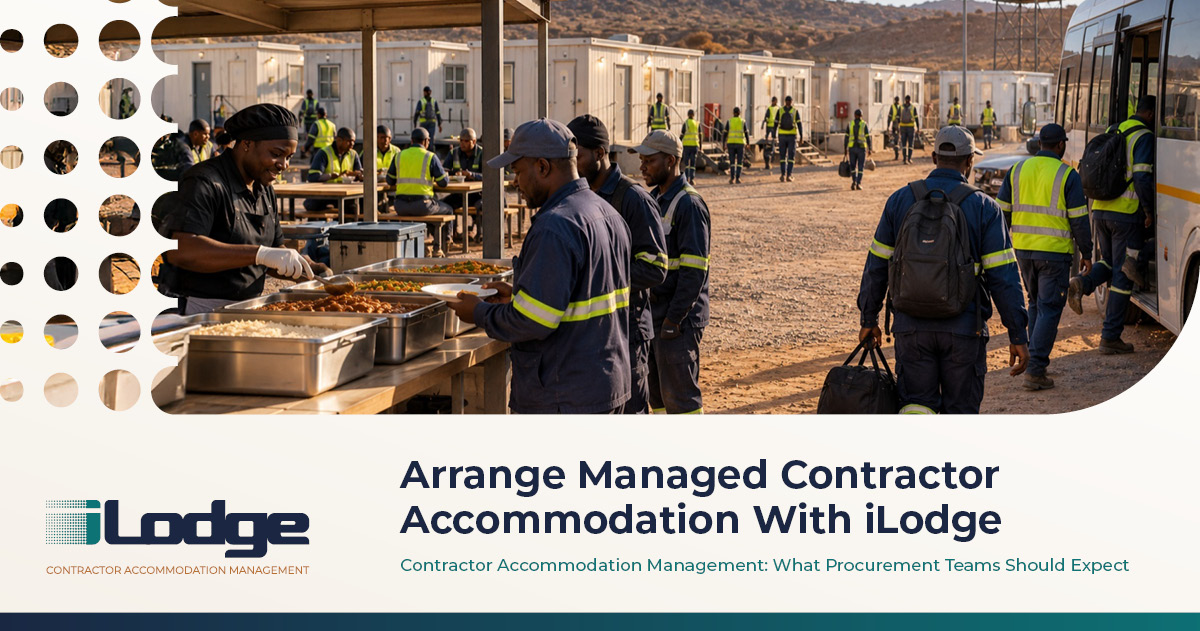
Our fifteen-year track record, supplier-funded commercial model and B-BBEE Level 4 standing provide the foundation for how we manage contractor accommodation. We coordinate accommodation and agreed support services around the project requirement, with consolidated invoicing and responsibility for managing the supplier relationship.
To discuss your next project, send us the location, expected team size, start date, anticipated duration and required services. Include any room configuration, shift, meal or transport requirements that will affect the arrangement. We can then assess serviceability and prepare a proposal for your team to review.
Visit https://ilodge.co.za/ to contact iLodge about your contractor accommodation requirements.
Quick article FAQ’s for interested suppliers
Our management service is funded through the negotiated supplier net rate spread, rather than a separate management fee added to the project budget. We aim for cost neutrality, and in most cases clients pay no more than the supplier’s standard advertised rate. The actual rates and included services are confirmed in the project proposal.
Yes. We coordinate revised accommodation and related supplier requirements when project dates or team sizes change. The arrangements depend on availability and the applicable commercial conditions, including any notice or cancellation requirements. Changes should follow the approval process agreed with the client.
We arrange contractor accommodation across South Africa’s major project and industrial corridors. For projects outside those areas, or away from towns and infrastructure, we assess and confirm serviceability based on the specific location and requirements.